
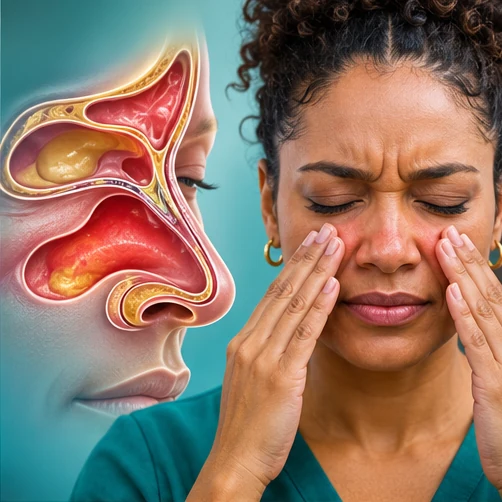
A blocked nose, facial pressure and persistent mucus can interfere with sleep, work and daily comfort. In Trinidad and Tobago, people often describe their symptoms as “sinus,” but that word does not identify the exact cause. Allergies, a viral cold, sinus inflammation and other problems can produce overlapping symptoms.
What does sinusitis mean?
Sinusitis refers to inflammation of the lining of the sinuses and nose, also called rhinosinusitis. It may occur during or after a cold. Symptoms can include nasal congestion, discharge, facial discomfort and reduced sense of smell. Most short-lived colds do not need antibiotics.
How do allergies differ?
Allergic rhinitis often brings sneezing, itchy or watery eyes, an itchy nose and clear nasal discharge. Triggers vary between people and can include dust mites, mould, pollen and other environmental allergens. Some patients have allergy and sinus inflammation at the same time.
When symptoms persist
Symptoms that continue for weeks, repeatedly return or noticeably affect smell and breathing deserve clinical assessment. An ENT specialist may evaluate nasal inflammation, the possibility of structural obstruction and whether further investigation is necessary. Not every patient needs a scan or surgery.
What can you do while arranging an assessment?
- Notice whether symptoms are linked to dust, dampness, weather or particular environments.
- Avoid smoke and other irritants where possible.
- Ask a clinician or pharmacist how to use prescribed nasal treatments correctly.
- Do not use decongestant nasal sprays continuously for longer than their recommended short course, because rebound congestion can occur.
- Discuss saline rinsing with a clinician if appropriate; use only sterile, distilled or previously boiled-and-cooled water for nasal irrigation.
Warning signs
Seek urgent medical care for swelling around the eye, visual change, severe or unusual headache, confusion, high fever with significant illness or worsening one-sided facial swelling.
ENT assessment in Trinidad
People searching for sinus treatment in Trinidad, ENT specialist Chaguanas or nasal blockage care in Central Trinidad should look for clear explanations of the assessment process and verified practice details. Dr. Richard Koonoolal's website provides information for patients considering an ENT consultation; the appropriate treatment depends on the individual examination.
The main message
A long-lasting blocked nose is not always “an infection.” Identifying whether allergy, inflammation or a different problem is involved helps avoid unnecessary treatment and directs care towards the cause.
Could both conditions happen together?
Yes. Someone with allergies may also develop a viral infection or sinus inflammation. Recurring symptoms should not automatically be labelled an infection, and yellow or green mucus alone does not prove that antibiotics are required. Duration, severity, fever, facial symptoms and examination findings help guide the assessment.
Practical questions for patients in Trinidad
Note when your symptoms are worst: while cleaning a dusty room, around smoke, during weather changes or after a respiratory illness. Record sneezing, itchy eyes, loss of smell and any previous response to treatment. This pattern can help distinguish rhinitis from another problem.
Can nasal rinsing help?
Some people are advised to use saline irrigation, but water safety matters. Use distilled, sterile or appropriately boiled and cooled water with clean equipment—not untreated tap water. Ask a clinician which products and techniques suit you, especially if you have recently had nasal surgery or experience significant pain or bleeding.
Questions about recurring nasal symptoms
Does green mucus mean I need antibiotics?
Discoloured nasal mucus alone does not establish a bacterial infection. Duration, severity, fever and the pattern of symptoms matter. Avoid unnecessary antibiotics and seek a medical evaluation when symptoms are persistent or worsening.
What should I tell the ENT doctor?
Share whether symptoms are seasonal, triggered by dust or pollen, or associated with sneezing, itchy eyes and changes in smell. Mention prior treatments and how frequently symptoms recur so the clinician can consider allergy and non-allergic causes.
Further reading and clinical references
Medical note: This information is for general education and cannot replace a personal examination or diagnosis.