
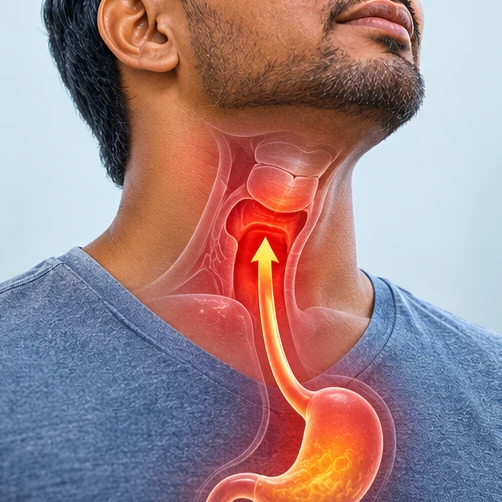
Do you frequently clear your throat, feel a lump sensation, or wake with a rough voice—yet rarely have heartburn? Some people with these symptoms wonder about laryngopharyngeal reflux (LPR), sometimes called silent reflux. LPR is one possible explanation, but these symptoms can also come from other conditions.
What is LPR?
Reflux occurs when stomach contents move upwards. When reflux reaches the throat or voice box, it may irritate sensitive tissues. LPR and ordinary heartburn-related gastro-oesophageal reflux can overlap, but a person with LPR-type symptoms may not notice typical heartburn.
Common symptoms
People may report frequent throat clearing, a persistent cough, hoarseness, excess throat mucus, a sensation that something is stuck in the throat, or an unpleasant taste. Symptoms alone do not confirm LPR. Allergies, post-nasal drainage, voice strain and other causes should be considered.
Food and lifestyle habits worth discussing
Some patients benefit from smaller meals, avoiding heavy meals close to bedtime, reducing foods that personally trigger symptoms and maintaining a comfortable weight. Common triggers may include very spicy or oily meals, acidic sauces, citrus, chocolate, peppermint, coffee and alcohol—but not everyone reacts to the same foods.
In Trinidad and Tobago, this may mean paying attention to symptoms after particular local meals, such as heavily peppered foods, fried snacks, rich curries or citrus drinks. It is usually more useful to identify personal triggers than to ban every familiar food without a reason.
What not to assume
A sore throat does not automatically mean acid reflux. Persistent hoarseness, swallowing problems or unusual pain should be assessed; do not self-treat indefinitely with antacids or acid-suppressing medicines without appropriate advice.
How is LPR evaluated?
A clinician will review symptoms, medical history and other possible explanations. An ENT doctor may discuss examining the nose, throat and voice box when indicated. In some cases, reflux testing or input from another specialty is useful. Treatment should be tailored to the findings.
When to seek prompt care
Difficulty breathing, inability to swallow, coughing up blood, unexplained weight loss, progressive swallowing difficulty or persistent severe throat symptoms require prompt medical attention.
Seeking ENT advice in Trinidad
If you are searching for an ENT specialist in Trinidad for throat clearing, hoarseness or suspected reflux, bring a short symptom diary, note food patterns, and list any medicines already tried. A careful assessment helps establish whether reflux is a plausible cause and what to do next.
Do I need to avoid all spicy Trinidadian foods?
Not necessarily. Food triggers differ from person to person, and a very restrictive diet may be unnecessary. Some patients notice more symptoms after heavy, late-night meals, pepper sauces, fried foods, citrus drinks or coffee. A simple diary recording meal timing and symptom patterns may help you identify possible triggers without assuming a single food is responsible.
Why throat symptoms need careful evaluation
Frequent throat clearing and a lump-in-the-throat sensation can occur with reflux, but also with allergies, nasal drainage, voice overuse or other conditions. The symptoms do not confirm LPR on their own. Prolonged hoarseness, painful swallowing, a neck mass or unexplained weight loss deserve medical assessment.
What can be discussed at a consultation?
A clinician may review eating habits, medications, symptoms, smoking exposure and related nasal or voice problems. Lifestyle steps, further evaluation or specialist referrals are chosen according to the findings. Avoid taking acid-suppressing medication indefinitely without discussing whether it is appropriate for your symptoms.
Questions about suspected silent reflux
Does throat clearing always mean LPR?
No. Allergy, voice irritation, respiratory illness and other conditions can cause frequent throat clearing. A diagnosis should not be based on one symptom alone; the clinician may consider your wider history and examination findings.
Should I change my diet before an assessment?
Some people find that avoiding late meals and identifying personal triggers helps reflux symptoms. However, persistent voice changes or difficulty swallowing should not be dismissed as diet-related. Seek medical advice if symptoms continue.
Further reading and clinical references
Medical note: This information is for general education and cannot replace a personal examination or diagnosis.