
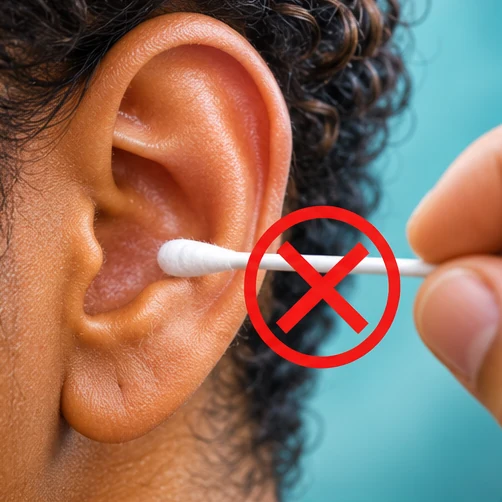
Healthy ears usually need much less cleaning than people think. In fact, earwax is part of the ear's normal protective system. It helps trap dust and debris, and ordinary jaw movement helps move old wax gradually towards the ear opening.
This guide reflects a key message from Dr. Richard Koonoolal's ear-care education material: protect the ear canal rather than trying to clean deep inside it.
Do: let your ears clean themselves
The skin of the ear canal naturally moves wax outwards. You can gently wipe the outer ear with a clean, damp cloth and dry it afterwards. Most people do not need to remove wax from inside the canal.
Don't: put cotton buds or other objects inside your ears
Cotton buds, hairpins, keys, pen caps and similar objects may push wax further in or scratch the delicate canal. A deep insertion can injure the eardrum. A cotton bud is useful for other tasks, but not for digging inside the ear.
Do: keep ears comfortably dry, especially if advised
After bathing or swimming, gently dry the outside of the ears. People with recurrent swimmer's ear or previous ear surgery may need individual advice about water precautions. Do not place sharp objects or cloth deep into the ear to remove moisture.
Don't: rely on bush remedies, ear candles or improvised treatments
Do not pour bush remedies, household oils or mixtures into the ear without medical guidance. Ear candles are not a safe method of cleaning wax. Different ear problems need different treatments, and using the wrong product can delay care or cause injury.
Don't use ear drops without medical advice
Have your ears checked first—even if a pharmacist recommends them. This is particularly important if you have ear pain, discharge, a known hole in the eardrum, ear tubes, previous ear surgery or sudden hearing changes. Some drops are not suitable for every ear condition.
Do: arrange an examination for persistent symptoms
Have the ear checked if there is persistent blockage, pain, hearing reduction, unusual discharge, dizziness or repeated infections. A clinician can identify whether wax, infection or another cause is responsible. Do not try to flush an ear at home when the eardrum may be damaged.
What about children?
Children can put small items into their ears without telling an adult. If you suspect a foreign object, avoid poking or using household tools to remove it. Seek medical care, particularly for a button battery, which requires immediate emergency assessment.
When to seek urgent care
Sudden hearing loss, severe pain with fever or swelling, facial weakness, injury, or a button battery in the ear warrants prompt medical attention.
A simple rule to remember
Clean the outside. Leave the inside alone. Have persistent symptoms assessed. Patients in Trinidad and Tobago searching for an ENT doctor for ear care can request an appointment to discuss the safest next step for their specific symptoms.
What if the ears feel itchy or blocked?
Itching can come from skin irritation, infection, dermatitis or other conditions, and a blocked feeling may be caused by wax, fluid or a change in hearing. Scratching the canal or repeatedly applying unknown products can make the problem worse. A proper ear examination is the safest way to determine which treatment, if any, is suitable.
Three everyday ear-care questions
Should I clean wax out every week?
No routine deep cleaning schedule is needed for most ears. Wax naturally moves outwards. Wiping the visible outer ear is usually enough unless a clinician identifies an obstruction.
Are ear candles or bush remedies safe?
Ear candles do not offer a proven safe way to remove wax and can cause burns or injury. Home mixtures and bush remedies should not be inserted into the ear; an injured eardrum or infected canal changes the safety of any substance placed there.
What if a pharmacist suggests ear drops?
Don’t use ear drops without medical advice. Have your ears checked first—even if a pharmacist recommends them. If there is discharge, severe pain, a previous ear operation or sudden hearing change, an examination is especially important. Ask the practice how urgently to arrange care.
Two common ear-care questions
Can I use drops recommended by a pharmacist?
Do not use ear drops without medical advice. Have your ears checked first, even if a pharmacist recommends them. A blocked or painful ear could have different causes, and the wrong preparation may irritate the ear or delay appropriate care.
When is earwax removal necessary?
Earwax does not need routine removal simply because it is visible. Removal may be considered when wax obstructs examination, causes symptoms or interferes with hearing equipment. A clinician can advise on the safest approach for your ear.
Further reading and clinical references
Medical note: This information is for general education and cannot replace a personal examination or diagnosis.