
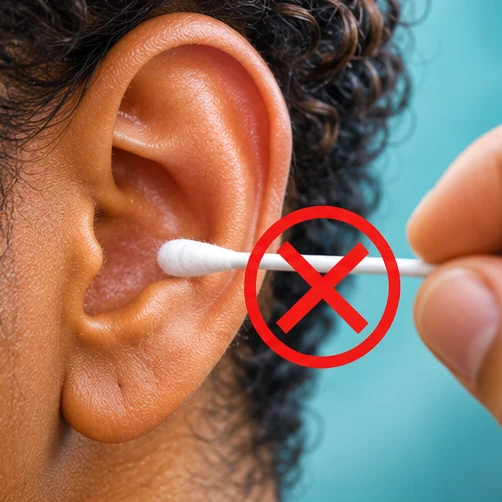
Earwax protects the ear and often moves out naturally. Recurrent blockage, pain or hearing changes deserve examination before attempting drops, flushing or home remedies. Whether earwax removal or another intervention is appropriate is determined during care and should be confirmed with the clinic.
Reasons to request an assessment
- Earwax build-up and blocked-ear symptoms
- Safe ear hygiene advice
- Ear discomfort and discharge assessment
- When not to use ear drops
What to expect
During an appointment, the doctor can review symptoms and discuss suitable next steps. Please contact the practice to confirm availability of particular tests, treatments or procedures.
Important: Serious or rapidly worsening symptoms, sudden hearing loss, severe breathing problems or significant bleeding need urgent medical attention.
Safe ear-care principles
Most ears clean themselves. Wax moves gradually towards the opening of the ear canal, where the outside of the ear can be gently wiped. Cotton buds, pins, hair clips and similar objects can push wax deeper or cause injury. Ear candles and unverified home remedies are not recommended.
Important guidance about drops
Don’t use ear drops without medical advice. Have your ears checked first, even if a pharmacist recommends them. Drops suitable for one condition may not be appropriate for another, particularly when pain, discharge, previous ear surgery or a possible perforated eardrum is involved.
Common questions
Why does my ear feel blocked?
Wax is one possibility, but infection, eardrum changes and hearing conditions can cause a similar sensation. An examination is more reliable than guessing from symptoms alone.
When should I be assessed?
Seek medical advice for persistent discomfort, discharge, troublesome hearing changes or repeated blockages. Sudden hearing loss should be assessed urgently.
More information: Read our related patient-education article →